

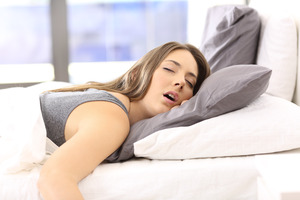
Oftentimes, drooling in your sleep is nothing to worry about. In many cases, it is simply the result of sleeping on your side or on your stomach. That being said, nighttime drooling can also be a side effect of a more serious problem. In particular, it can sometimes be linked to sleep apnea – an all-too-common sleep disorder that can lead to serious health issues if it isn’t addressed properly.
What Exactly is Sleep Apnea?
Having sleep apnea means that your breathing is repeatedly interrupted while you’re asleep. These pauses in breathing can put stress on your cardiovascular system, making heart problems more likely to occur. On top of that, whenever your breathing stops, it can disrupt the sleep cycle, thereby preventing you from getting quality rest.
Why is Drooling Sometimes a Side Effect of Sleep Apnea?
The most common type of sleep apnea is obstructive sleep apnea, which can occur when the airway is partially or completely blocked. This blockage can cause you to start breathing through your mouth as part of your body’s efforts to get the air it needs. Open-mouth breathing often leads to drooling since it’s easier for saliva to inadvertently fall out.
Drooling is not always a warning sign of sleep apnea. That said, if you have a tendency to drool at night, it’s worth keeping an eye out for other symptoms that tend to be associated with sleep-disordered breathing, including loud snoring, morning headaches, and excessive tiredness during your waking hours.
What Should You Do If You Have Sleep Apnea?
Before sleep apnea can be treated, it needs to be diagnosed. This involves undergoing a sleep study where your breathing and other vital signs are monitored while you’re asleep. A sleep expert can review the results of the study and determine whether sleep apnea is to blame for your symptoms.
Once a diagnosis has been made, you can pursue an appropriate form of treatment. In many cases, this may mean getting a personalized oral appliance from your dentist. When worn at night, an oral appliance can help keep your airway open, which reduces the risk of your breathing being interrupted.
Drooling at night isn’t always a serious problem, but if you have any reason to think that it might be related to sleep apnea, you should take the appropriate steps to get the care you need as quickly as possible.
About the Author
Dr. John “Jack” Warwick studied dentistry at the University of Pittsburgh. He completes over 100 hours of advanced training every year, and he is a Fellow of the Las Vegas Institute for Advanced Dental Studies. He offers a wide range of dental services, and he has a particularly strong interest in using customized oral appliances to treat sleep apnea. If you need a solution for sleep-disordered breathing, you can schedule an appointment with Dr. Jack at Warwick Dentistry in Pittsburgh by visiting his website or calling (412) 391-1130.