

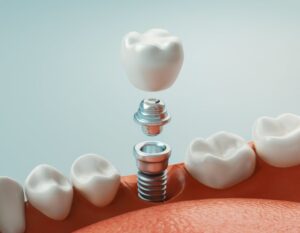
Dental implants are designed to look, feel, and function like natural teeth, so it can be concerning if you experience sensitivity around one. Many patients ask, “Why do I feel sensitivity in my dental implant?” While the implant itself cannot feel pain, the surrounding tissues can. Understanding the possible causes can help you know when sensitivity is normal and when it’s time to see your dentist.
The Implant Itself vs. Surrounding Tissue
A dental implant is made of titanium and placed into the jawbone, where it fuses with the bone through a process called osseointegration. Because implants don’t contain nerves, they can’t feel temperature or pressure. Any sensitivity you experience usually comes from the gum tissue, nearby teeth, or the bone surrounding the implant rather than the implant itself.
Common Causes of Implant Sensitivity
One common cause of sensitivity is gum inflammation around the implant. Plaque buildup can irritate the gums, leading to soreness, tenderness, or bleeding—similar to gingivitis around natural teeth. This condition, known as peri-implant mucositis, is often reversible with improved oral hygiene and professional care.
Another possible cause is bite misalignment. If the implant crown is taking too much pressure when you bite or chew, it can stress the surrounding bone and tissues, leading to discomfort. Your dentist can adjust the bite to restore proper balance.
Sensitivity may also come from nearby natural teeth. Receding gums or enamel wear on adjacent teeth can create the sensation that the implant is sensitive when the source is actually a neighboring tooth.
Early Healing vs. Ongoing Sensitivity
Mild tenderness is normal in the early stages after implant placement or crown attachment as tissues heal and adapt. However, sensitivity that persists weeks or months later is not considered normal and should be evaluated.
In more serious cases, sensitivity may signal peri-implantitis, an inflammatory condition that affects the bone supporting the implant. This can lead to bone loss and implant failure if left untreated, making early detection crucial.
When to See Your Dentist
You should contact your dentist if implant sensitivity is persistent, worsening, or accompanied by swelling, redness, bleeding, or pain when chewing. Early intervention can often resolve the issue and protect the implant.
Feeling sensitivity around a dental implant doesn’t necessarily mean something is wrong, but it shouldn’t be ignored. While the implant itself can’t feel pain, the surrounding tissues can signal irritation or imbalance. With prompt evaluation and proper care, most causes of implant sensitivity can be addressed, helping your implant remain comfortable, healthy, and long-lasting.
About the Practice
Are you in the market for the gold standard for replacing missing teeth? We have the answer with dental implants at Warwick Dentistry. We can handle the entire procedure under one convenient roof, so you don’t need endless referrals to unfamiliar practices. With computerized dental implant surgery for precise placement and several options for teeth-in-a-day, you can bet that you’re getting the best cutting-edge treatment available. Schedule an appointment online or call our Pittsburgh office at (412) 391-1130.